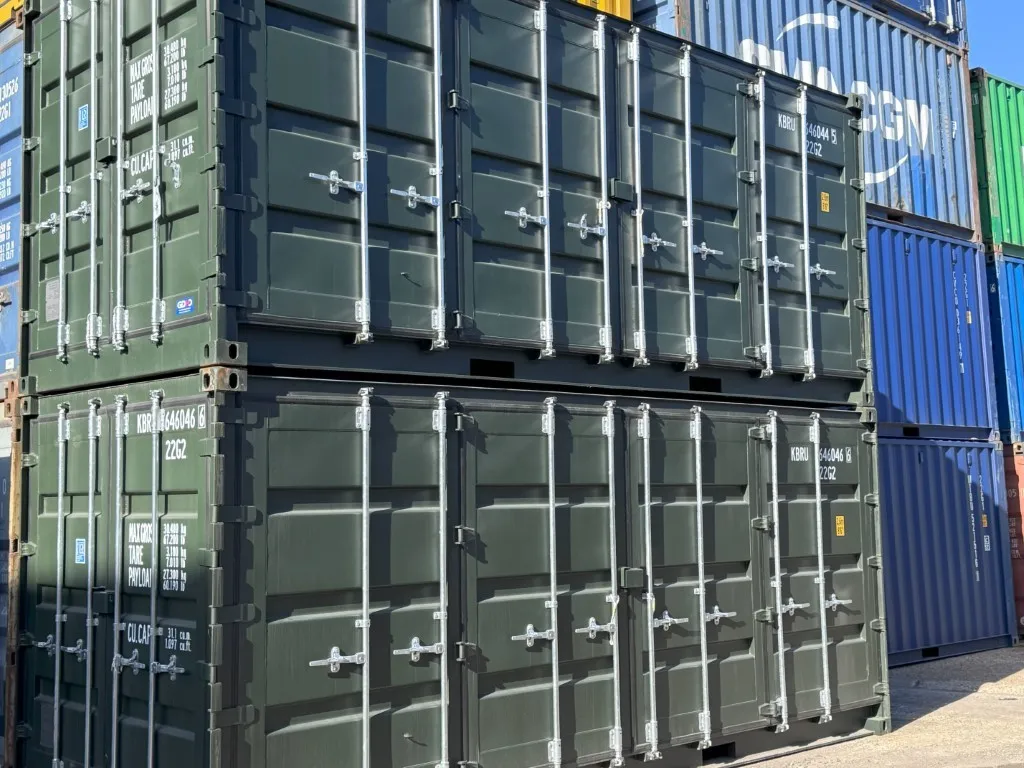
20ft Open Side Shipping Containers
Shipping Containers of Birmingham specialises in supplying and delivering 20ft open-side containers to businesses throughout the West Midlands. These units differ from standard shipping containers by providing full access along one 20ft side. While standard units open only at the narrow end, the open-side model features bi-fold doors that swing back to reveal the entire interior. This design is vital for logistics managers who need to load pallets via forklift from the side or store long materials that cannot navigate the turn through the end doors.
Midlands-based manufacturing hubs and retail distributors use these units to streamline their operations. We offer these containers for both short-term projects and permanent site installations. You can choose to buy a unit for a fixed location or hire a container to manage seasonal stock surges. Shipping Containers of Birmingham ensures every unit is structurally sound and ready for immediate deployment to sites in Birmingham, Solihull, Coventry, and the surrounding areas.
Dimensions and Technical Specifications
The 20ft open side container maintains the standard ISO footprint, allowing it to fit into standard transport and stacking systems. However, the side-access mechanism requires a reinforced frame to maintain structural integrity without the support of a solid steel wall. We supply these in both standard-height and high-cube variants.
| Feature |
Standard Height (Metric) |
Standard Height (Imperial) |
| External Length |
6.058m |
20ft |
| External Width |
2.438m |
8ft |
| External Height |
2.591m |
8ft 6in |
| Internal Length |
5.898m |
19ft 4in |
| Internal Width |
2.287m |
7ft 6in |
| Internal Height |
2.302m |
7ft 7in |
| Side Door Opening Width |
5.820m |
19ft 1in |
| Tare Weight |
3,200kg |
7,050lb |
| Maximum Payload |
27,280kg |
60,140lb |
Tare weight refers to the weight of the empty steel unit. Payload is the maximum weight of the goods you can safely load inside. Every container from Shipping Containers of Birmingham includes a CSC plate. This Container Safe Convention plate is a safety certificate that proves the unit is fit for international transport and stacking. For clients needing more vertical space, our high cube open side units provide an extra foot of height, bringing the external height to 9ft 6in.
Ready to Start Your Container Project?
Get expert advice on container sales and hire today.
Key Features and Industrial Benefits
The 20ft open side unit is a versatile asset for heavy industry. Shipping Containers of Birmingham sources units built to handle the rigours of repeated loading and harsh weather.
Full Side Access Doors
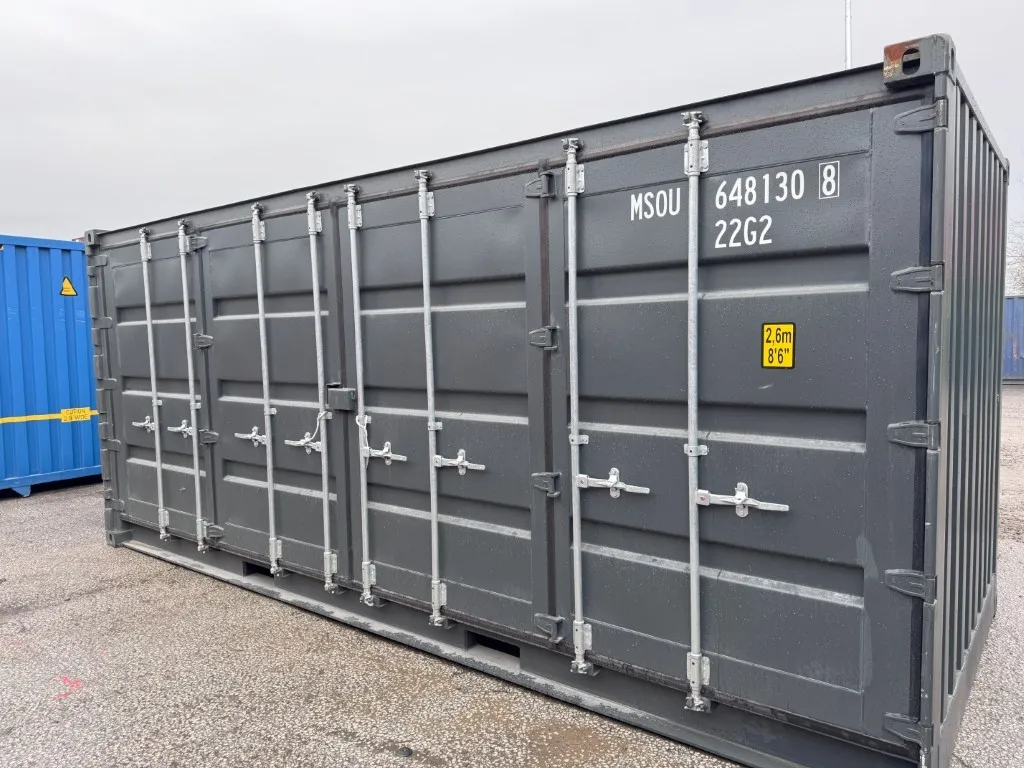
The primary feature is the set of four bi-fold doors along the side. These doors lock securely but can be opened in pairs or in full to expose the entire 20ft span. This is essential for storing items like 6-metre steel pipes, timber packs, or industrial machinery that a crane or side-loader must place. This dual-access design includes standard end doors, providing multiple entry points for improved stock rotation.
Cor-Ten Steel Construction
We supply units made from Cor-Ten steel. This is a high-strength, weathering steel that forms a stable rust-like appearance when exposed to weather, which actually prevents deep corrosion. This ensures the container remains wind and watertight (WWT). WWT means the unit is sealed against the elements, keeping your cargo dry and protected from the Midlands’ rain and wind.
Marine-Grade Plywood Flooring
The internal floor consists of 27 mm-thick marine-grade plywood. This flooring is treated to resist moisture and pests. It is supported by steel cross-members that allow the container to handle heavy point loads from forklifts and pallet trucks. Shipping Containers of Birmingham ensures the floor is in top condition to support industrial traffic.
Site Delivery and HIAB Positioning
Shipping Containers of Birmingham manages the entire delivery process using HIAB vehicles. A HIAB is a truck equipped with a hydraulic crane arm that can lift and place the container with high precision. This is particularly useful for placing units in tight spaces or over obstacles like fences and walls.
Successful delivery requires proper site preparation. You must ensure the ground is level and firm. We recommend concrete, tarmac, or compacted gravel. Placing an open side container on soft grass or mud will cause it to sink unevenly. Because the side doors rely on a square frame to operate properly, any sinking can cause them to jam. You must also check for overhead obstructions. The HIAB crane requires vertical clearance, so avoid areas with low power lines or overhanging trees.
For businesses in busy urban areas such as central Birmingham or Wolverhampton, we check access constraints before sending the vehicle. We can review your site using satellite imagery to ensure the truck has enough turning room. If your site has very restricted access, we may suggest alternative units or placement strategies. Our location services team can provide more details on delivery to specific Midlands postcodes.
Common Applications in the Midlands
Businesses use 20ft open side units for more than just simple storage. Their unique access makes them ideal for several specialist uses.
- Inventory Management: Retailers use them for palletised stock, allowing them to reach items at the back without unloading the whole container.
- Workshops and Studios: The side-opening makes the unit feel larger and allows installation of large equipment or storefront-style glass once modified.
- Event Spaces: These units are often used as pop-up shops, bars, or exhibition stands due to the wide "stage-like" opening.
- Oversized Cargo: Engineering firms use them to transport items that cannot fit through standard 2.3-metre end doors.
If you need even more space for high-volume inventory, you might consider a 40ft shipping container. However, for most sites in Newcastle-under-Lyme or Stoke-on-Trent, the 20ft footprint is easier to manage.
Condition Grades: One-Trip vs Used
Shipping Containers of Birmingham offers these units in two primary grades. The choice depends on your budget and how the unit will be used.
New (One-Trip) Containers
A "one-trip" container is a new unit that has made a single journey from the factory in Asia to the UK. These are in excellent condition with clean paintwork and minimal marks. They are the best choice for high-visibility locations or projects where aesthetics matter. They also feature the most modern locking mechanisms and the easiest-to-operate door hinges.
Used Containers
Used open side units are rarer than standard used boxes but offer a cost-effective alternative. These units have served in the shipping fleet for several years. They will show signs of age, including surface rust, dents, and repairs. Shipping Containers of Birmingham inspects every used unit to guarantee it is wind and watertight and that all side doors function correctly. These are ideal for industrial yards or hidden storage areas.
Planning and Compliance
In most cases, a shipping container is classed as a temporary structure. However, if you plan to keep a unit on-site permanently in the Midlands, you should check with your local council. Rules can vary between Birmingham, Dudley, and Stafford. We recommend you visit the UK Planning Portal for guidance on local requirements. Keeping your installation compliant avoids potential fines or removal orders.
For export use, the container must maintain its CSC certification. If you buy a unit for international shipping, we ensure it is "cargo worthy." This means it meets the safety standards required by shipping lines and insurance providers. You can read more about our quality standards on our about us page.
Frequently Asked Questions
How secure are the side doors compared to the end doors?
The side doors on our 20ft open side containers are very secure. They feature the same heavy-duty steel locking bars as standard end doors. We also fit lock boxes to the side doors. A lock box is a steel shroud that protects your padlock from bolt cutters. This makes the unit a secure vault for your tools or stock. For more security tips, see our 20ft container information.
Can I stack other containers on top of an open side unit?
Yes. While the side wall is replaced by doors, the frame is specifically reinforced at the corners to handle the weight of a stacked container. However, the unit must be placed on perfectly level ground to ensure the weight is distributed correctly through the corner posts. Shipping Containers of Birmingham can advise on safe stacking configurations for your site.
Do the side doors make the container less waterproof?
No. Each door is fitted with industrial-grade rubber seals. When the doors are locked, they create a wind and watertight seal. We test every unit to ensure no water can enter. This protects sensitive goods from dampness. If you have extremely moisture-sensitive items, you might also consider our 20ft open top or standard units with anti-condensation treatments.
How much space do I need to open the side doors?
The bi-fold doors swing outwards, so you need at least 2.5 metres of clear space along the side of the container to open them fully. If you are placing the unit near a wall or another container, ensure you leave enough room for the doors to operate and for a forklift to approach. We can help you plan your site layout during the quote process.
Can I hire an open-sided container for a week?
Our hire periods generally start with a minimum term of 12 weeks to cover the logistics costs of delivery and collection. However, we offer flexible terms for longer projects. Hiring is a popular choice for construction sites in Stoke-on-Trent or Leicester. To get a specific quote for your project duration, please visit our quote page.