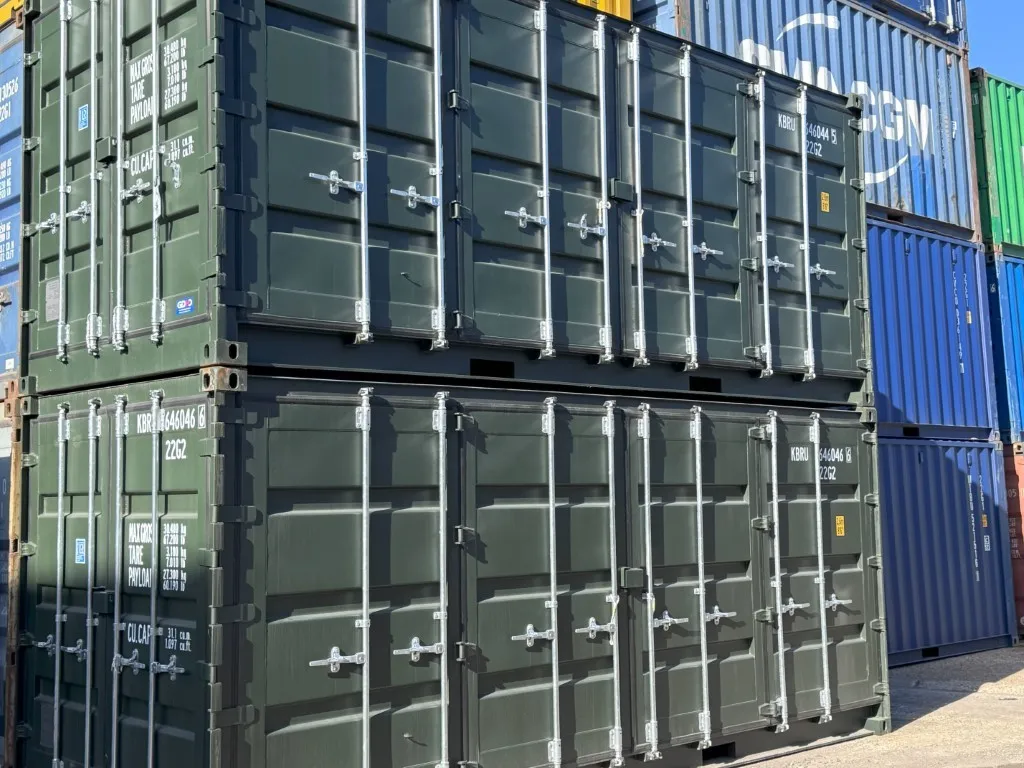
Agricultural and Farming Shipping Container Solutions
Durable Storage for Midlands Farms
Farmers across the Midlands face the constant challenge of securing expensive equipment and protecting stock from pests and the weather. Shipping Containers of Birmingham supplies robust steel units designed to withstand the harsh conditions of a working farm. These units are made of Cor-Ten steel, a weathering steel that resists deep corrosion. This makes them ideal for long-term outdoor use on rural sites in Staffordshire, Warwickshire, and Worcestershire. Whether you need to buy a permanent unit or hire one for seasonal harvests, we provide versatile options to suit your land.
- Feed and seed storage: Keep bulk feed and expensive seeds dry and rodent-proof. A wind and watertight unit prevents rain and damp from spoiling your stock. Wind and watertight means the unit has intact seals and no holes to let in the elements.
- Machinery and tool storage: Secure tractors, ploughs, and expensive hand tools in a lockable steel box. We recommend a 20ft shipping container for standard tool storage and a small plant.
- Fertiliser and chemical storage: Safely house hazardous materials away from livestock and water sources. We can modify units to include bunded floors, which are internal trays designed to catch and contain spills.
- Harvest and produce storage: Use a 20ft refrigerated container or a larger 40ft refrigerated container to keep produce fresh during peak harvest times.
- Field offices and welfare units: Create a dry space for staff to take breaks or manage paperwork in remote fields.
We deliver these units directly to your farm using HIAB vehicles. A HIAB is a lorry equipped with a hydraulic crane arm that lifts the container into place. You only need to ensure the ground is level and firm before we arrive. Proper site preparation prevents the steel doors from sticking and ensures the unit remains stable over time.
Specialist Containers for Large Equipment
Agricultural machinery often exceeds the width or height of a standard box. Shipping Containers of Birmingham provides specialist equipment to help you manage oversized loads. If you need to store wide machinery, a 20ft open side container allows for full side loading. This makes it easy to drive vehicles directly into the unit. For taller items, we supply high cube containers, which offer an extra foot of vertical space compared to standard units.
For items requiring top-loading via a farm crane or telehandler, we provide the 20ft open-top container and the 40ft open-top container. These units feature removable tarpaulin covers instead of a solid steel roof. If you have bulky, heavy loads that do not fit in an enclosed unit, consider a 20ft flat rack container or a 40ft flat rack container. These have no side walls and are perfect for harvesters or heavy irrigation plant equipment.
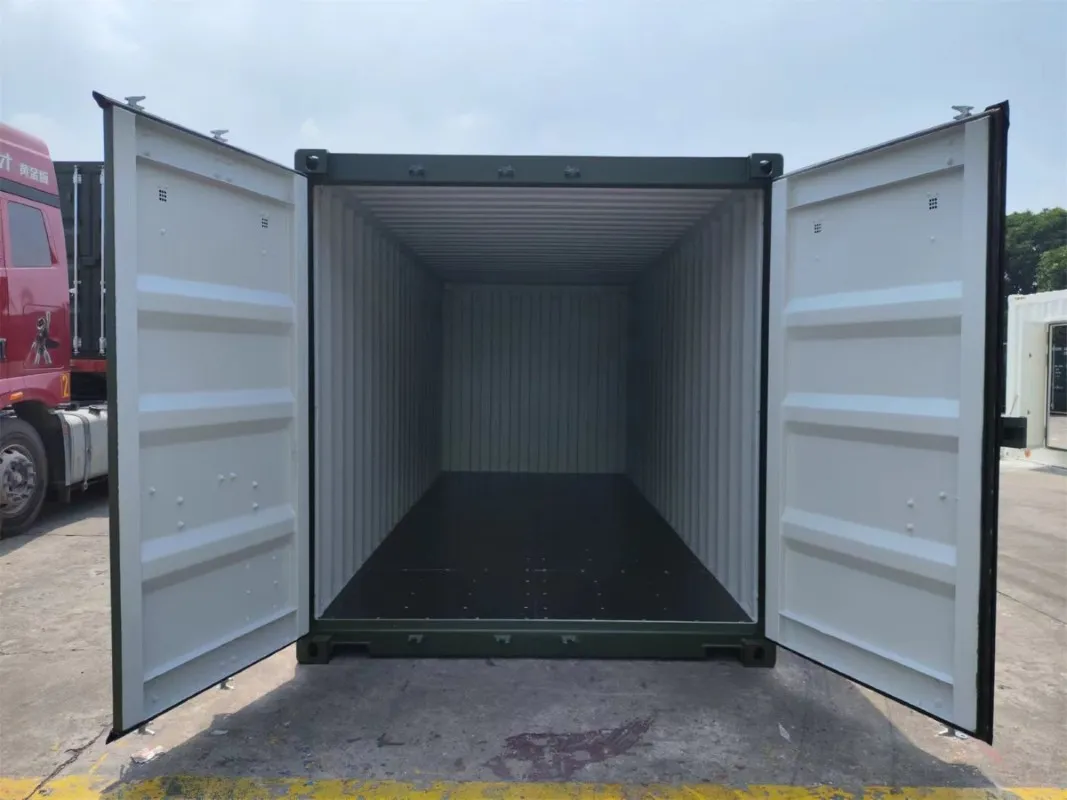
Technical Specifications and Condition Grades
When you choose a unit from Shipping Containers of Birmingham, it is important to understand the technical terms. Every container we supply for export use comes with a CSC plate. A CSC plate is a safety approval plate required for international shipping to prove the unit is structurally sound. For on-site storage, the plate is less critical, but the overall grade matters.
One-Trip Containers
A one-trip container is a unit manufactured in Asia and shipped to the UK with a single cargo load. These are the highest quality units available. They feature minimal dents and fresh paint. They are the best choice if the unit will sit near a farmhouse or in a public-facing area where appearance is important. They also offer the longest lifespan for long-term grain or machinery storage.
Used Containers
Used units are retired from international shipping lines. While they may have surface rust and dents, Shipping Containers of Birmingham inspects every used unit to ensure it is wind and watertight. These units are a cost-effective choice for general farm storage, where the container's appearance is less important than its ability to keep rain and wind from your goods. We also check the tare and payload of these units. Tare is the weight of the empty container, and payload is the maximum weight of goods the unit can safely hold.
Operational and Conversion Solutions
Beyond simple storage, Shipping Containers of Birmingham supports agricultural operations with bespoke conversions. Our team can modify containers to serve as functional buildings, avoiding the need for traditional brick-and-mortar construction. This flexibility allows you to adapt your farm infrastructure as your business grows.
- Irrigation equipment housing: Protect pumps and control systems from frost and theft in a dedicated steel housing.
- Workshop containers for repairs: Set up a dedicated repair shop in a 40ft shipping container to fix machinery on site.
- Livestock support storage: Store veterinary supplies and bedding in a secure, central location that stays dry.
- Seasonal equipment storage: Get a container for the months you need it most. You can rent containers to handle short-term needs without a long-term purchase commitment.
- Mobile units for remote farmland: Move your storage to where the work is. If your farm spans several miles, we can move containers between locations as your requirements change using our specialised transport fleet.
Learn more about our history of supporting Midlands businesses with dependable logistics and high-quality steel units.
Ready to Start Your Container Project?
Get expert advice on container sales and hire today.
Regional Delivery and Site Access
Shipping Containers of Birmingham serves the entire Midlands region. We understand that rural access can be difficult. Our drivers are experienced in navigating narrow lanes and reaching remote farmyards. To ensure a smooth delivery, we need to know about any overhead obstructions like power cables or low branches. The HIAB crane requires significant vertical clearance to lift the unit safely. We also need a clear turning circle for the lorry, which can be up to 65 feet long for a 40ft unit.
Ground conditions are vital. We must deliver onto hard-standing ground such as concrete, compacted gravel, or tarmac. Delivering onto soft soil or wet grass risks the vehicle becoming stuck and the container sinking, which can warp the frame and make the doors impossible to open. If your site has challenging access, contact us before you get container prices so we can review your location using satellite imagery.
Do I need planning permission for a container on my farm?
In many cases, shipping containers are classed as temporary structures and may not need planning permission. However, rules change if you place them permanently or if your farm is in a conservation area or near a listed building. We recommend you check the UK Planning Portal for specific guidance in your local council area before you buy. Shipping Containers of Birmingham can provide the dimensions and specifications you need for your local council application.
How do you prevent condensation in farm containers?
Rapid temperature changes in open fields can cause moisture to build up inside steel boxes. We can apply anti-condensation coatings to the ceiling or provide extra vents to allow air to flow. This keeps your feed and tools dry. For very sensitive goods like electronics or certain seeds, consider our insulation options, which help maintain a more stable internal temperature. You can find more details on our about page regarding our technical standards.
Can you deliver a container to a soft field?
Our HIAB trucks are very heavy. We require hard-standing ground, such as concrete or compacted gravel, to deliver successfully. We cannot drive on soft mud or wet grass because the vehicle will sink. Always check your site access before you get container prices. If the delivery is for a remote field, ensure there is a solid pad for the container to sit on.
What is the difference between a 20ft and a 40ft container for farm use?
A 20ft shipping container is the most popular choice for farm storage because it is easier to place in tight yards. It offers roughly 1,170 cubic feet of space. A 40ft shipping container is better for large machinery or high volumes of hay and straw, offering over 2,300 cubic feet of space. The 40ft unit requires a much larger delivery vehicle and more space to manoeuvre.
Can I use a shipping container to store grain?
Yes, shipping containers are ideal for grain storage because they are vermin-proof. Rodents cannot chew through the Cor-Ten steel walls. We recommend using a 20ft shipping container fitted with additional ventilation to keep the grain in peak condition. For bulk grain loading, a 20ft open-top container can be used with a crane or an elevator.
How secure are containers from theft on remote sites?
Shipping containers are highly secure. Shipping Containers of Birmingham provides containers with heavy-duty locking bars. We also recommend fitting a lock box, which is a steel shroud that protects the padlock from being cut with bolt croppers. This makes the unit an excellent choice for storing high-value items like quad bikes or chainsaws on remote farmland.