Entertainment and Event Shipping Container Solutions
Secure Storage for Festivals and Live Events
The event industry requires rapid setup and secure storage for high-value gear. Shipping Containers of Birmingham provides the steel units needed to keep festivals, stage shows, and sporting events running smoothly across the Midlands. Our containers protect sound systems, lighting rigs, and stage sets from theft and the unpredictable British weather. We supply units made from Cor-Ten steel, a weathering steel that resists deep corrosion, ensuring your assets remain safe in outdoor environments.
Most of our units include a factory-fitted lock box. A lock box is a steel shroud that protects your padlock from bolt cutters. For event organisers, this security is vital when leaving equipment on site overnight in public spaces. Whether you need to buy a permanent unit for a venue or rent containers for a weekend festival, we provide solutions that scale with your project.
- Stage and production equipment storage: Secure speakers, mixing desks, and rigging in a dry unit. We ensure every unit is wind and watertight. Wind- and watertight means the container is fully sealed against rain and wind, keeping the interior dry.
- Bar and concession stock storage: Keep beverages, glassware, and snacks safe. For large events, a 40ft shipping container provides the volume needed for bulk stock.
- Event infrastructure storage: Store tables, chairs, crowd-control barriers, and temporary flooring when not in use.
- Backstage support units: Create a secure hub for crew gear, technical manuals, and expensive cabling.
- Staff welfare and break areas: Provide a dry, quiet space for staff to rest away from the main event noise.
Guest-Facing Hospitality and Retail Solutions
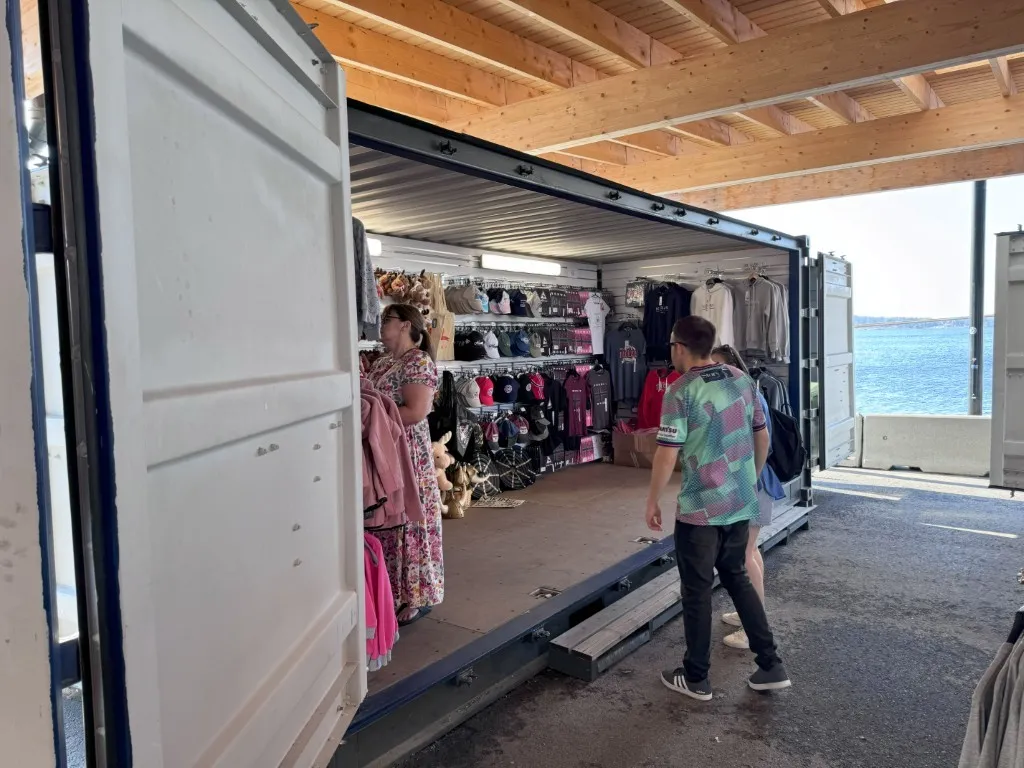
Containers are an ideal choice for pop-up retail, temporary bars, and hospitality hubs. Shipping Containers of Birmingham supplies units that serve as the functional face of your event. Their modular design allows our team to modify containers into bespoke guest spaces that are both durable and visually striking. Using steel boxes for retail provides an industrial aesthetic that is popular at modern food festivals and Christmas markets.
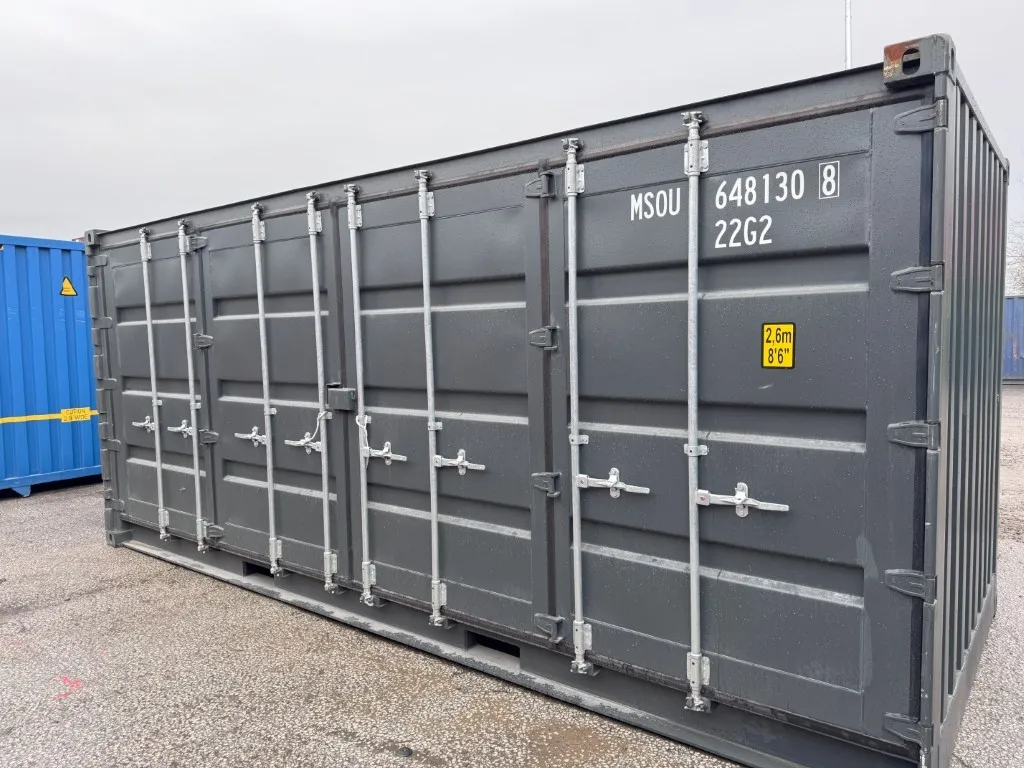
For hospitality, we recommend the 20ft open side container. This unit features doors that open along the entire side wall, providing a wide serving area and easy customer access. It removes the bottleneck of standard end doors, making it perfect for high-traffic bars or clothing stalls. If you have a touring show, these units are easy to close and lock at the end of the night, securing your entire storefront in seconds.
- Pop-up bars: Create a fully functional bar with internal plumbing and electrical hookups.
- Ticket booths and entrance pods: Manage guest entry with a secure, professional ticket office.
- Production offices: Manage your event from a professional, relocatable workspace with desks and lighting.
- Broadcasting and control rooms: House sound boards, lighting controllers, and media equipment in a secure, climate-controlled environment.
- Merchandise stalls: Sell event gear from a secure unit that can be branded to match your event theme.
Specialist Equipment for Large Productions
Large-scale productions often involve oversized items that do not fit through standard doors. Shipping Containers of Birmingham provides specialist containers to solve these logistical hurdles. If you need to load heavy stage sections or generators from above using a crane, the 20ft open-top container or 40ft open-top container is the correct tool. These units use a removable tarpaulin instead of a fixed steel roof.
For items that exceed standard width or height, such as lighting towers or large sculptures, we offer flat rack solutions. A 20ft or 40ft flat rack container provides a reinforced platform without side walls, allowing easy loading of bulky production assets. For catering needs, we supply 20ft and 40ft refrigerated containers to keep food and drinks at the correct temperature throughout the event.
Event Logistics and HIAB Delivery
We understand that event timelines are strict. Shipping Containers of Birmingham provides reliable delivery across the Midlands using our own fleet of HIAB vehicles. A HIAB is a lorry equipped with a hydraulic crane that can lift and place the container exactly where you need it. This allows us to place units over fences or onto specific pads, saving you the cost of hiring a separate crane on site.
To ensure a safe delivery, we need to know the tare and payload of your cargo if we are moving a full unit. Tare is the weight of the empty container. Payload is the maximum weight of goods the container can safely hold. For a standard 20ft unit, the tare is roughly 2.2 tonnes. Knowing these figures helps our drivers plan the lift safely. We can also move containers between venues for touring events, ensuring your infrastructure follows your show.
Ground conditions are critical at event sites. We must deliver onto hard-standing ground, such as concrete, tarmac, or compacted gravel. While we can often deliver onto dry, flat grass fields, our heavy vehicles will sink into soft mud. Always check your site access and ground firmness before you get container prices. You should also check for overhead obstructions, such as power cables or low branches, that could obstruct the HIAB crane.
Ready to Start Your Container Project?
Get expert advice on container sales and hire today.
Compliance and Technical Standards
When using containers for public events, safety and compliance are paramount. For units used on international tours, a CSC plate is required. A CSC plate is a safety approval plate that proves the container is structurally sound for international transport. We also offer units maintained to the IICL standard. IICL stands for the International Institute of Container Lessors, representing the highest standards for repair and condition in the industry.
For guest-facing units, we recommend one-trip containers. A one-trip container is a new unit that has made only one journey from the factory, arriving in nearly perfect condition with minimal dents or rust. This provides a professional appearance for your brand. You can learn more about our quality standards and the differences between new and used units on our dedicated page.
Planning and Local Council Guidelines
While shipping containers are often considered temporary structures, you must still consider local planning rules. This is especially true for permanent venues or units located in sensitive areas, such as city centres. We recommend you check the UK Planning Portal or contact the Birmingham City Council planning department for guidance on temporary structures. Shipping Containers of Birmingham can provide the dimensions and technical drawings needed to support your application.
Can I get a container for a short weekend festival?
Our standard hire periods usually start at 12 weeks. For very short events, it is often more cost-effective to buy a container and then sell it back or move it to your storage yard once the event ends. We can help you move the unit between locations as needed.
Are open-sided containers secure for a pop-up bar?
Yes. The side doors on our 20ft open side containers are made of high-grade steel and feature heavy-duty locking bars. When the event is closed, the unit is as secure as a standard shipping container. We also fit lock boxes as standard to protect your padlocks from tampering.
How do you prevent condensation from damaging sound and light equipment?
Steel units can suffer from condensation during temperature shifts. We can modify your container with anti-condensation coatings or internal insulation and lining. This prevents moisture from dripping onto sensitive electronic components, keeping your production gear in top condition.
Can you paint the container to match our event branding?
Yes. We can respray units in any RAL colour to match your festival or corporate branding. This is a popular option for businesses that buy containers for long-term use at venues or for high-profile marketing tours.
How much space do you need to deliver a 40ft container?
A 40ft shipping container requires a large delivery vehicle, often up to 65 ft long. We need a clear turning circle and plenty of height for the HIAB crane to operate. If your event site has narrow gates or low trees, please discuss this with us before you get container prices.
Do your refrigerated containers need a special power supply?
Yes, our 20ft refrigerated containers typically require a 32-amp, three-phase power supply. If you are running these at a festival, you must ensure your site electrician or generator provider can supply the correct connection. These units are essential for maintaining food safety and keeping drinks cold in hot weather.