Shipping Container For shipping Containers of Birmingham offers new and used shipping containers for sale in Oakham and Rutland. Our experts help you choose cost-effective storage or logistics solutions.
We provide units for a range of needs, from factory storage and construction site security to residential clear-outs and cargo transport. All containers are structurally sound, wind and watertight, with intact seals and no holes.
For international shipping, we supply containers with a valid CSC plate, certifying safety for export and stacking.
Container Options and Specifications in Oakham
Choosing the correct size and type of container is vital for site efficiency. Shipping Containers of Birmingham offers several standard and specialised units. Each type serves different cargo and space requirements. We provide detailed FAQs to help you understand the technical nuances of each model.
Standard Shipping Containers
- 20ft Shipping Containers: This is our most common size. A 20ft shipping container offers approximately 33 cubic metres of space. It is ideal for small to medium-sized storage needs and fits well on most commercial premises.
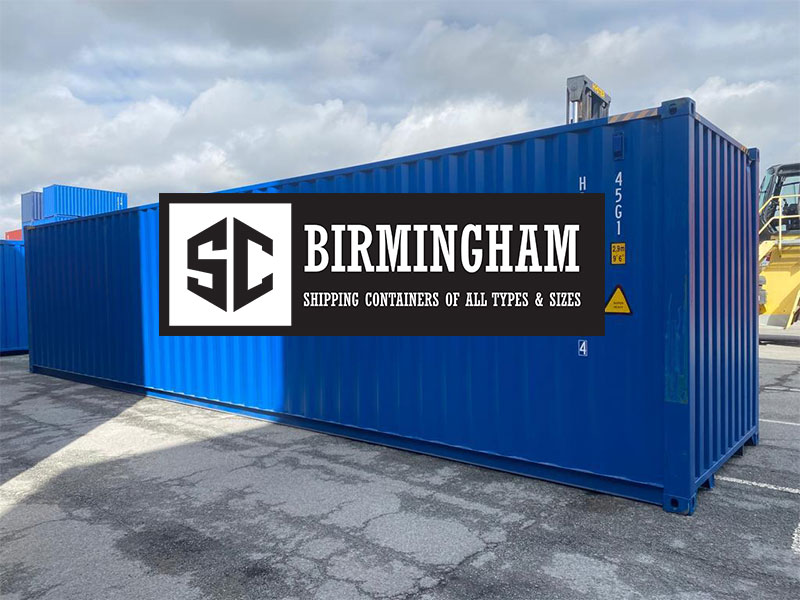
- 40ft Shipping Containers: If you have high volumes of goods, a 40ft shipping container is the most efficient choice. These units double the storage capacity of a 20ft unit but require more space for delivery and placement.
Specialised Equipment
Some projects require more than a standard steel box. We supply specialised containers to the Oakham area for temperature-controlled goods or oversized cargo.
Condition Grades: New vs Used
Shipping Containers of Birmingham supplies units in two primary conditions. Your choice depends on your budget and how long you intend to use the unit. You can explore our full range of new and used containers for sale to see current stock.
One-Trip (New) Containers
A one-trip container is the closest to a new unit available in the UK market. These are manufactured in Asia and carry a single cargo load to the UK. Once they arrive, we sell them to clients in Oakham. These units feature the latest paint finishes, easy-to-use door handles, and a factory-fitted lock box. A lock box is a steel shroud that protects your padlock from bolt croppers.
Used Containers
Used containers have spent several years in international shipping. They will show signs of use, including dents, surface rust, and varied colours. However, Shipping Containers of Birmingham inspects every used unit. We guarantee they are wind and watertight. These are an excellent choice for industrial sites where aesthetics are less important than security and cost.
Delivery and Site Access in Oakham
We deliver containers using HIAB vehicles. A HIAB is a truck equipped with an on-board hydraulic crane. This allows us to lift the container over small obstacles and place it precisely on your site. For a successful delivery in Oakham, you must consider the following factors. For more details, see our container delivery information page.
Space and Clearance
The delivery vehicle needs significant room to operate. A 20ft container truck requires approximately 10 metres of length and 3 metres of width. When offloading, the crane arm extends to the side, requiring a minimum width of 6 metres. You must also check for overhead obstructions. Power lines, low branches, and building eaves can prevent a crane from operating safely. We require at least 6 metres of vertical clearance for the lift.
Ground Surface Requirements
The ground where we place the container must be level and firm. Shipping Containers of Birmingham cannot deliver on soft grass, mud, or loose sand. These surfaces are unstable and can cause the container to sink or the delivery vehicle to get stuck. Acceptable surfaces include dry compacted gravel, concrete, asphalt, or firm dirt. If you must place a unit on grass, ensure the ground is dry and use wooden planks or rail sleepers to distribute the weight.
A level surface is essential for the operation of the container doors. If the ground is uneven, the container frame can twist slightly. This racking makes it difficult or impossible to open and close the heavy steel doors. You can use concrete slabs or timber at the corners to level the unit.
Local Compliance and Planning in Oakham
Before you buy or hire a shipping container, check if you need planning permission. In many cases, shipping containers are viewed as temporary structures. However, local rules in Rutland may vary depending on the duration of use and location. If you place a container in a conservation area or near a listed building in Oakham, you are more likely to need formal approval.
We recommend contacting the planning department at Rutland County Council to discuss your plans. You can find more information on the Rutland County Council planning portal. Taking this step early prevents potential legal issues or the cost of removing a unit later.
Hire vs Buy: Which is Right for You?
Shipping Containers of Birmingham helps you decide whether to purchase or rent a container in Oakham. The right choice depends on your project duration.
- Hire: If you need storage for less than 12 months, hiring a shipping container is usually the better option. It requires less upfront capital, and we collect the unit once you finish with it. This is popular for construction projects or temporary factory renovations. Our Oakham container hire service offers flexible terms.
- Buy: If you need a permanent storage solution, buying is more cost-effective. Owning the unit allows you to modify it, such as adding shelving or electricity, and you avoid ongoing weekly costs.
Do I need a crane to offload my container in Oakham?
No, Shipping Containers of Birmingham provides delivery via HIAB vehicles. These trucks have their own cranes to lift and place the container. You only need to ensure the site is clear and the ground is suitable for the vehicle and the unit's weight. Review our delivery guide for full site requirements.
Are the containers secure against theft?
Yes, our containers are made of high-grade corrugated steel. Most of our new units come with a pre-installed lock box. For used units, we can provide lock boxes as an add-on. This feature prevents intruders from using cutting tools to reach the padlock. You can find more security tips in our FAQs.
What is a one-trip shipping container?
A one-trip container is essentially new. It is manufactured in Asia and used once to transport goods to the UK. After it is emptied, Shipping Containers of Birmingham brings it into our fleet for sale. They offer the best condition and longest lifespan for users in Oakham.
Can I use a shipping container for export from Oakham?
Yes, provided the unit has a valid CSC plate. This plate proves the container meets international safety standards for sea freight. If you intend to use a unit for export, please let us know when you request a quote so we can ensure the certification is up to date.
How do I prevent condensation inside my container?
Metal containers can suffer from condensation when temperatures change. We recommend using moisture traps or ensuring the goods inside are dry before storage. For long-term storage of sensitive items, Shipping Containers of Birmingham can advise on internal lining or ventilation options.
What is the difference between a standard container and a High Cube?
A standard container is 8ft 6in tall. A High Cube container is 9ft 6in tall. This extra height is useful for storing tall machinery or for installing a false ceiling in a converted office space. We stock both types in our 40ft container range.
Can Shipping Containers of Birmingham deliver to narrow streets?
Delivery depends on the specific dimensions of the street and any tight turns. Our delivery vehicles are large and heavy. If you have concerns about access in Oakham, please send us photos of the route and the delivery site. We can often evaluate the path using satellite maps or site surveys. Detailed access requirements are listed on our delivery page.


